
Does a Laser Wood Paint Removal Machine Really Work?
Published: 03.MAR.2026



Technical Analysis, Cases and Full Application Guide
Laser cleaning technology is developing fast in the market. Especially in removing paint and stains from wood surface, it is used more and more in furniture renovation field. Many users are interested in this solution because it looks cleaner and more modern than sanding or chemical stripping.
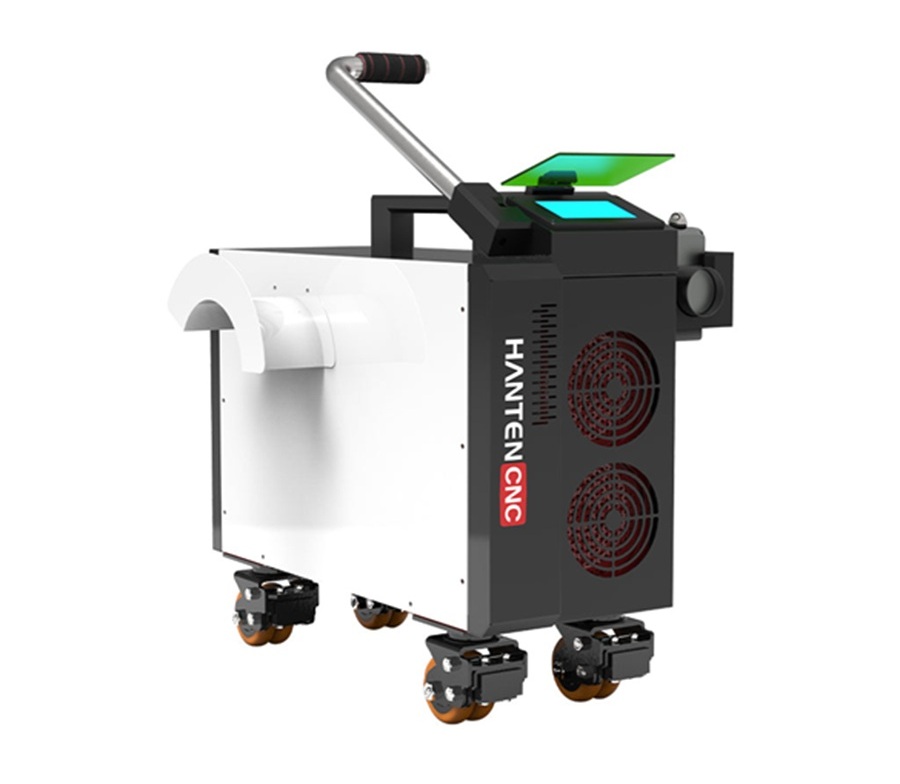
This article will first introduce the main functions of laser wood paint removal machine. Then we will share some typical cases in wood paint removal. If you are looking for a paint removal solution that is both efficient and does not damage the wood, you may want to learn more about Hanten CNC's laser cleaning technology, which can provide an ideal solution for wood renovation.
1. What Is a Laser Wood Paint Removal Machine?
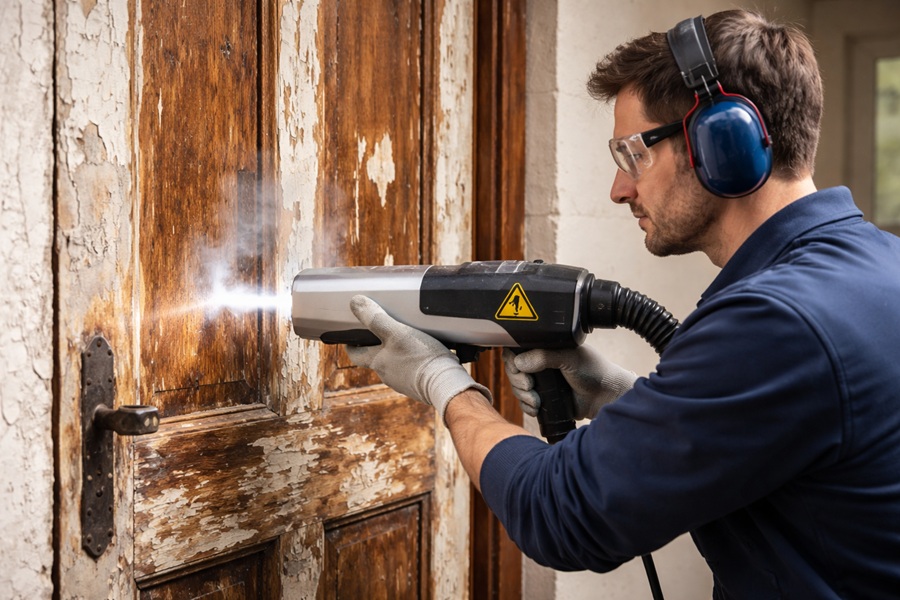
A laser wood paint removal machine is a device that uses high-energy laser beam to remove coatings on wood surface, including paint, varnish and resin layers.
Its main features are:
● Non-contact cleaning
● No direct mechanical force
● More precise control
● Less dust compared with sanding
Compared with traditional sanding, chemical stripping or wire brushing, laser paint removal is more environmentally friendly. It can also handle complex shapes like carved furniture, stairs or detailed wood structures. It is especially useful for high-end furniture or cultural heritage restoration projects where wood texture must be protected.
2. Technical Principle of Laser Paint Removal on Wood
The core principle is selective absorption of laser energy.
Process is like this:
1. The machine emits high-energy laser beam (commonly 1064 nm. wavelength for pulsed fiber laser).
2. The coating absorbs more laser energy than the wood base material.
3. The coating temperature increases very fast.
4. The paint expands, cracks or vaporizes.
5. The layer separates from wood surface.
Because the pulse duration is very short (nanosecond to millisecond level), heat does not go deep into the wood. So the risk of cracks or heavy burn marks is reduced when parameters are set correctly.
It is similar to using a very fine engraving tool to remove only the top layer, but without touching the wood physically.
3. Types of Laser Paint Removal Machines and Applications
Laser paint removal machines can be divided into two types according to output mode.
3.1 Pulsed Laser Paint Removal Machine
Features:
● High precision
● Small heat affected area
● Suitable for layer-by-layer removal
Applications:
● Furniture restoration
● Cultural relic protection
● Carved wood products
● Detailed components
Advantages:
● Protect original wood grain
● Flexible operation
● Better control for delicate jobs
3.2 Continuous Laser Paint Removal Machine
Features:
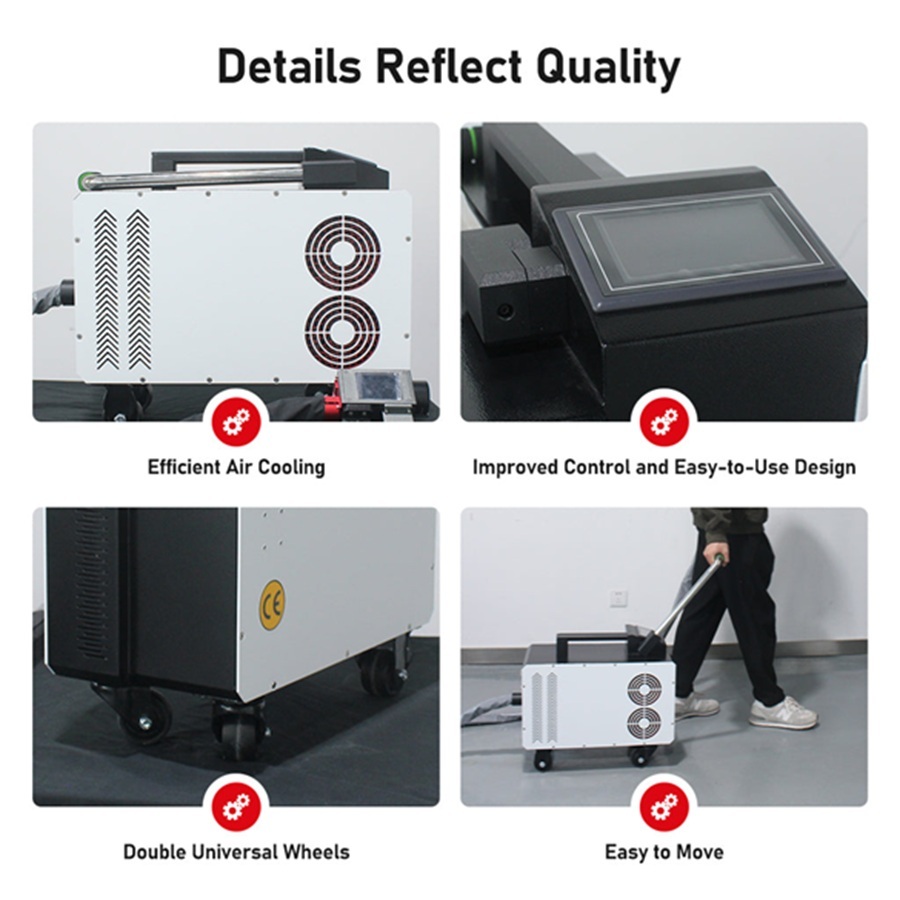
● Continuous output
● Larger coverage area
● Faster cleaning speed
Applications:
● Stair renovation
● Large wood floor stripping
● Industrial wooden surface maintenance
Advantages:
● Higher efficiency
● Suitable for batch industrial work
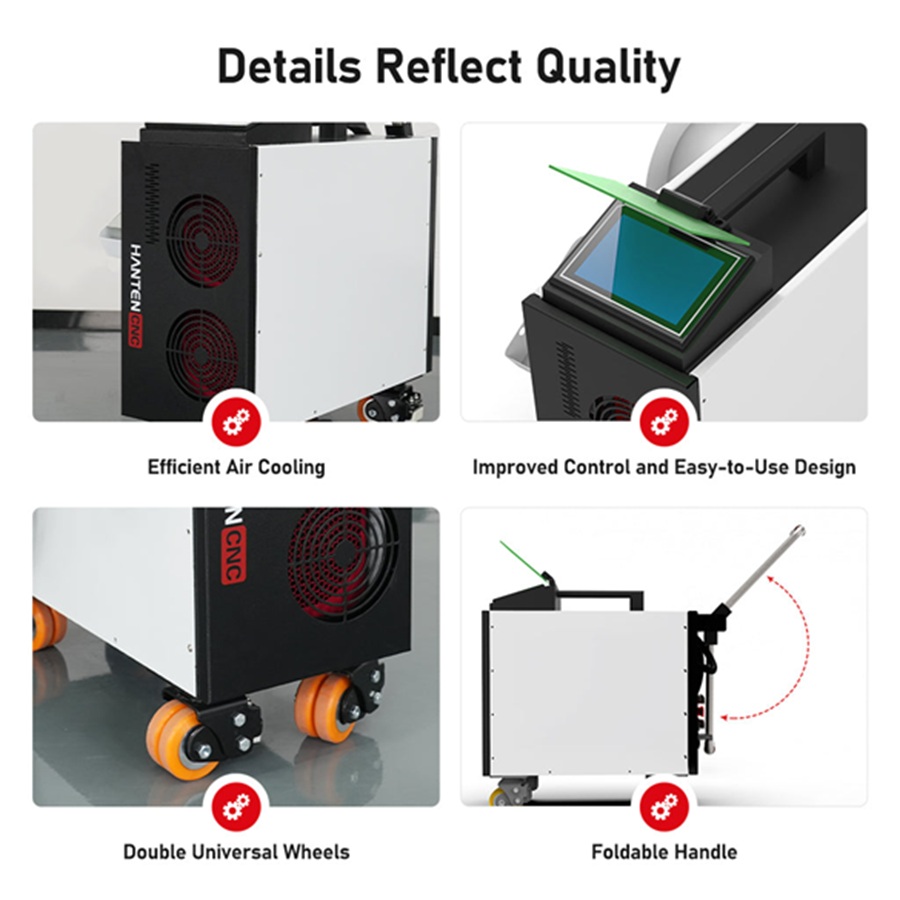
👉 Suggestion: Pulsed laser is better for small and detailed work. Continuous laser is more suitable for large surface renovation.
4. Real Case Sharing
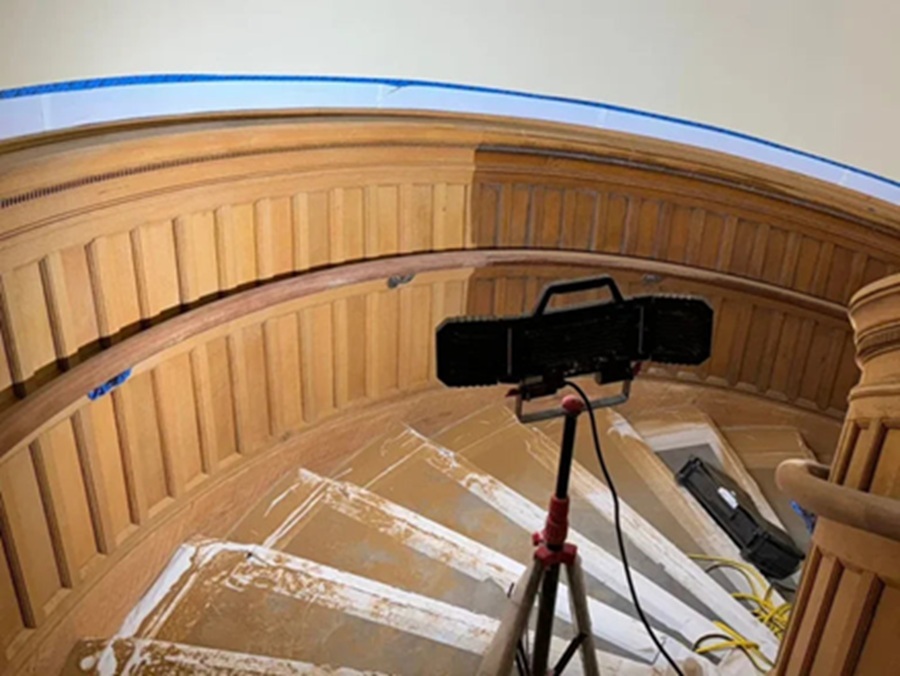
Case 1: Stair Renovation
A pulsed laser machine was used to clean old paint on wooden stairs. The wood grain remained clear and complete. Surface became smooth after cleaning, and no extra sanding was needed before repainting.
Case 2: Solid Wood Furniture Restoration
A pulsed laser machine removed thick oil paint on a solid wood desk. Carved details were kept intact. Compared with manual sanding, labor time reduced by more than 60%.
Case 3: Large Area Wood Floor Renovation
A continuous laser machine was tested on residential wooden floor. The speed was about three times faster than manual sanding. Heat damage was very small, and surface could be repainted directly.
Case 4: Antique Furniture Protection
Low-power pulsed laser was used on antique carved furniture. The aged paint layer was removed successfully while keeping historical wood texture. The result was good for conservation purpose.
5. What Kind of Wood Coatings Are Suitable for Laser Cleaning?
Coating Type |
Suitable for Laser |
Difficulty |
Notes |
Water-based paint |
Yes |
Low |
Good absorption, high efficiency |
Normal oil paint |
Yes |
Medium-Low |
Power adjustment may be needed |
Thin resin coating |
Yes |
Medium |
Better to remove layer by layer |
Highly cured epoxy |
Not easy |
High |
Strong adhesion, may need multiple passes |
Polyurethane (PU) |
Not easy |
High |
Heat resistance is strong |
When coating thickness is more than 300µm, it is better to operate in several passes to reduce slight damage risk on wood surface.
6. Common Operation Mistakes (Practical Experience)
Mistake 1: Too High Laser Power Causing Black Marks
Some operators think higher power means faster cleaning. But wood has limited heat tolerance. If power is too high, wood fiber may carbonize and surface becomes dark or black.
It is better to start from lower power and increase slowly after testing.
Mistake 2: Moving Too Slow and Causing Burn Edges
If laser beam stays too long in same position, edge burning may happen. This can damage wood texture.
Keep the laser head moving evenly. Avoid overlapping too much in same area.
Mistake 3: Thick Coating Creating Carbonized Layer
When coating is very thick (more than 300 µm.), removing it in one time may create black carbon layer on surface.
Correct way is to remove it step by step with lower power and multiple scans.
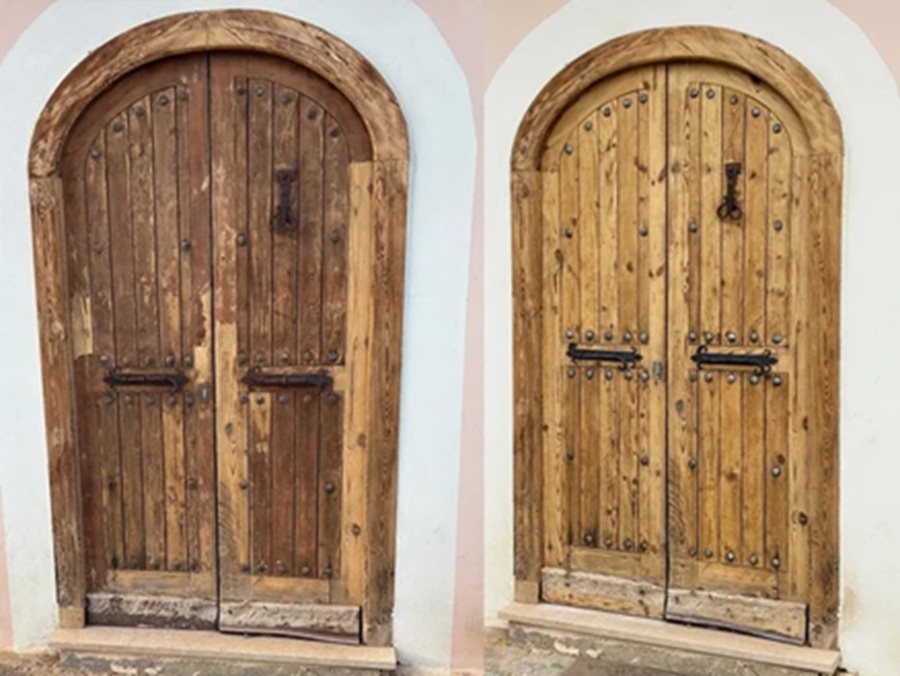
7. Limitations of Laser Paint Removal
Laser paint removal is effective, but it is not suitable for all situations.
Not Suitable for Very Low Budget Small Workshops
Laser equipment cost is relatively high. If job volume is small and project income is limited, return period may be long.
Not Ideal for Extremely Thick Industrial Epoxy
When epoxy coating is thicker than 500 µm., efficiency becomes low. Mechanical assistance may still be required.
Not Suitable for Highly Reflective Coatings
High-gloss UV coatings reflect more laser energy. Cleaning speed will decrease.
Not Ideal for Markets That Only Focus on Lowest Price
If customers only care about cheapest cost, traditional sanding may still be chosen.
8. Comparison with Traditional Methods
Method |
Efficiency |
Wood Damage |
Environmental Impact |
Application |
Laser removal |
High |
Low |
High (clean) |
Furniture, stairs, floors |
Manual sanding |
Medium |
Higher |
Low (dust) |
Small renovation |
Chemical stripping |
Medium |
Medium |
Low (chemical waste) |
Flat surfaces |
Steam cleaning |
Low |
Medium |
Medium |
Small areas |
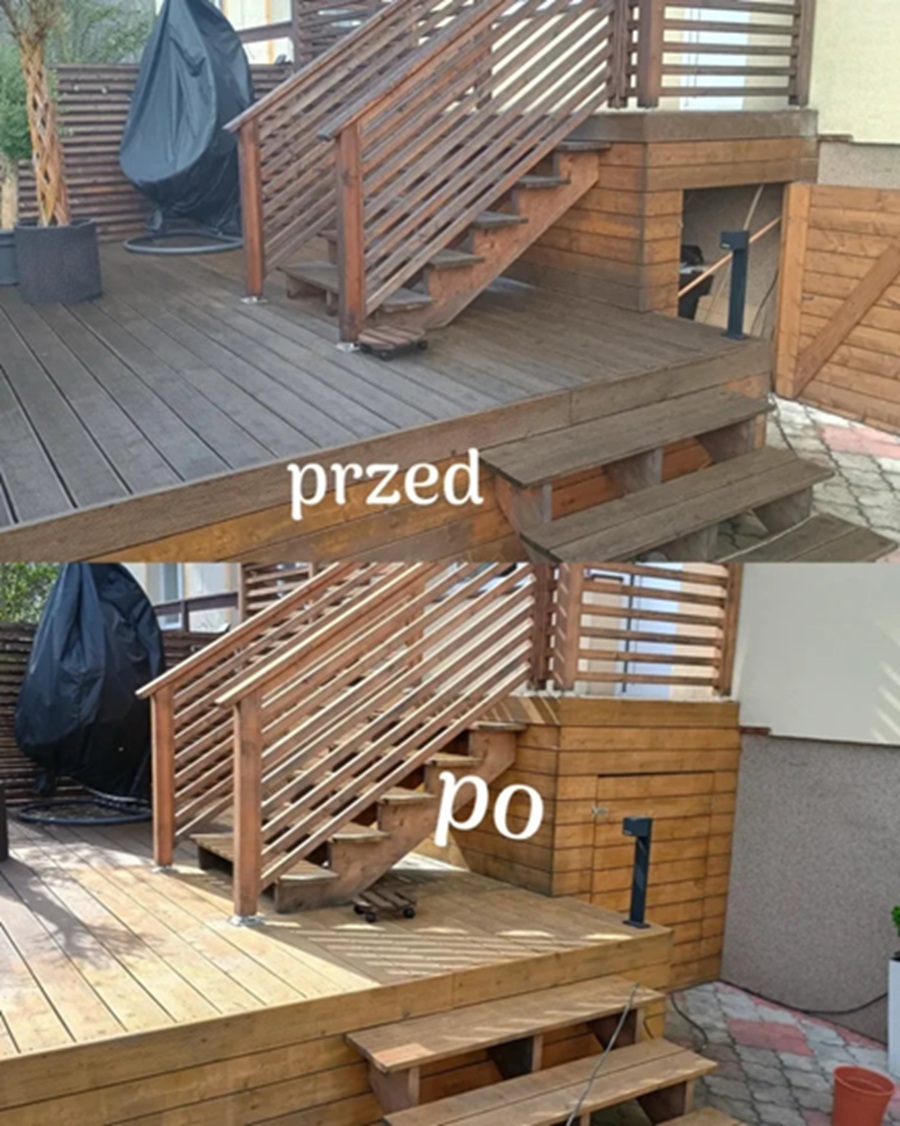
👉 Laser removal balances efficiency, environmental protection and non-destructive cleaning.
9. Industry Trend and Market Value
With stricter environmental regulations and increasing demand for furniture renovation, laser paint removal market is growing.
Portable laser devices are becoming more common. In future, laser cleaning may be used in more complex wood structures, ship wood surfaces and heritage restoration projects.
10. FAQ
Q1: Does wood hardness affect laser paint removal?
Yes. Hard wood absorbs heat slower, so slightly higher power or multiple passes may be needed. Soft wood is easier to process.
Q2: Which is better for furniture renovation, pulsed or continuous laser?
For small furniture and carved products, pulsed laser is better. For large floors or stairs, continuous laser may be more efficient.
Q3: Do operators need professional training?
Basic training is necessary. Operators should understand power setting, scanning speed and safety rules.
Q4: Can laser completely replace sanding?
In high-precision and environmentally strict projects, laser has clear advantage. But in some rough large-area jobs, sanding still has its place.
Filed in: / Machines & Tools / Laser Paint Removal
Advertising