
A dump trailer earns its price at the far end of the trip, not while it is being loaded
Published: 26.AUG.2026



Loading is the same work either way
American properties move a great deal of material through late summer, and most of it travels in something towed behind a mower or a quad. A dump trailer is loaded with a shovel exactly like a flat cart, and everything it saves happens after that.
Unloading a fixed cart means shovelling the same material a second time, in a more awkward position, standing beside it rather than above it. That second handling is usually the longer of the two.
Tipping turns ten minutes into ten seconds
A release and a lift empties the box in one movement. On a job measured in loads rather than in shovelfuls, that saving multiplies, and it is the reason a tow behind dump trailer for an ATV pays for itself on gravel and mulch work rather than on a single afternoon. That is the whole case for a dump trailer.
Placement improves as much as speed does
Material tipped where it is wanted needs no spreading afterward. Backing to the exact spot and releasing produces a pile in position, which removes the barrow work that follows a load dumped wherever the cart could reach.
How much does a cubic foot of soil weigh decides the real limit
Dry topsoil runs somewhere near eighty pounds a cubic foot and wet soil considerably more. At those figures a fifteen cubic foot box reaches its 1500 pound rating at around two thirds full, and the sides never come into it.
Gravel and wet sand behave the same way. Only light material such as mulch, leaves, or wood chip fills the box before the weight limit arrives, which is why the volume and the capacity are two separate numbers rather than a description of the same load.
Weight also decides whether the towing vehicle copes
A quad or a lawn tractor pulling three quarters of a ton on a slope is being asked for a great deal, particularly when stopping. Loading to the weight limit on flat ground and to considerably less on a grade is judgement rather than specification.
Removable sides change what it carries
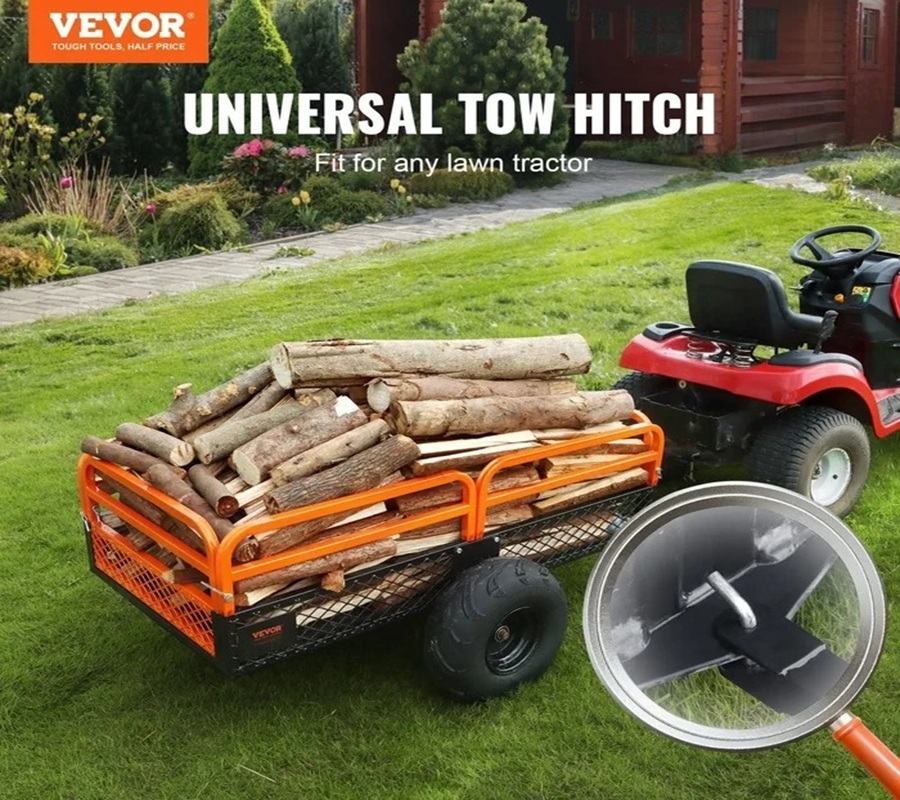
Sides off, the same trailer becomes a flat deck for lumber, fence posts, or anything longer than the box. That is a different tool rather than a lesser one, and it removes the trip that would otherwise need a truck.
Carts divide by how they empty
● Flat cart: shovel it off again.
● Tipping cart: releases in one movement.
● Powered dump: hydraulic, needs a supply.
Where a tipping box pays and where it does not
● Strength: unloading stops being a second job.
● Strength: material lands where it is wanted.
● Limit: dense material hits weight before volume.
● Limit: towing vehicle limits the load on slopes.
Weighed against a flat cart, a 1500 pound dump trailer costs a little more and returns half the handling on every load. A property owner in Vermont moved twelve loads of gravel in a morning and describes the difference as being able to keep going rather than being faster.
Property work is being judged on how many trips it takes
Owners increasingly choose equipment by how much of a job it removes rather than by what it holds, having found that the handling around a task usually costs more time than the task itself.
That way of comparing equipment is why the outdoor equipment TMG Industrial supplies is described by how a load is released as much as by how much it carries.
Filed in: / Home & Garden / Dump Trailers
Advertising